Aligning our lives with the first words in scripture.
First-Sentence perspective exists to help form and restore a Biblical worldview by exploring the Bibles’s original context, culture, and language. Through the first words of scripture, we gain a more accurate understanding of what we believe about God and the foundation of our faith.
Imagine if every birthday, wedding anniversary, or national triumph got shuffled to the nearest Monday—not because the joy or event wasn't real, but for the sheer convenience of a tidy schedule.
In the Temple courts, towering menorahs blaze against the winter night,
their flames proclaiming a memory—
light that once defied desecration.
aul's sobering description of the "man of lawlessness" (without "good works"; without Torah) in 2 Thessalonians 2:3-4 is particularly revealing. This figure is called the "son of destruction" …
There's a fascinating progression in Ephesians 2 that captures the essence of our relationship with God's Torah (Instruction) and "good works."
From the beginning, God created humanity to bear His Name and fill the earth with His glory. Rebellion profaned it—from Eden to Babel to Israel’s failure.
Through Yeshua, the perfect Image, that Name is restored and exalted above all. The Gospel announces: God’s original purpose is fulfilled—His dwelling with us forever (Rev 21:3).
Today, on Yom Kippur - the Day of Atonement when God covers and makes whole - I enter the operating room …
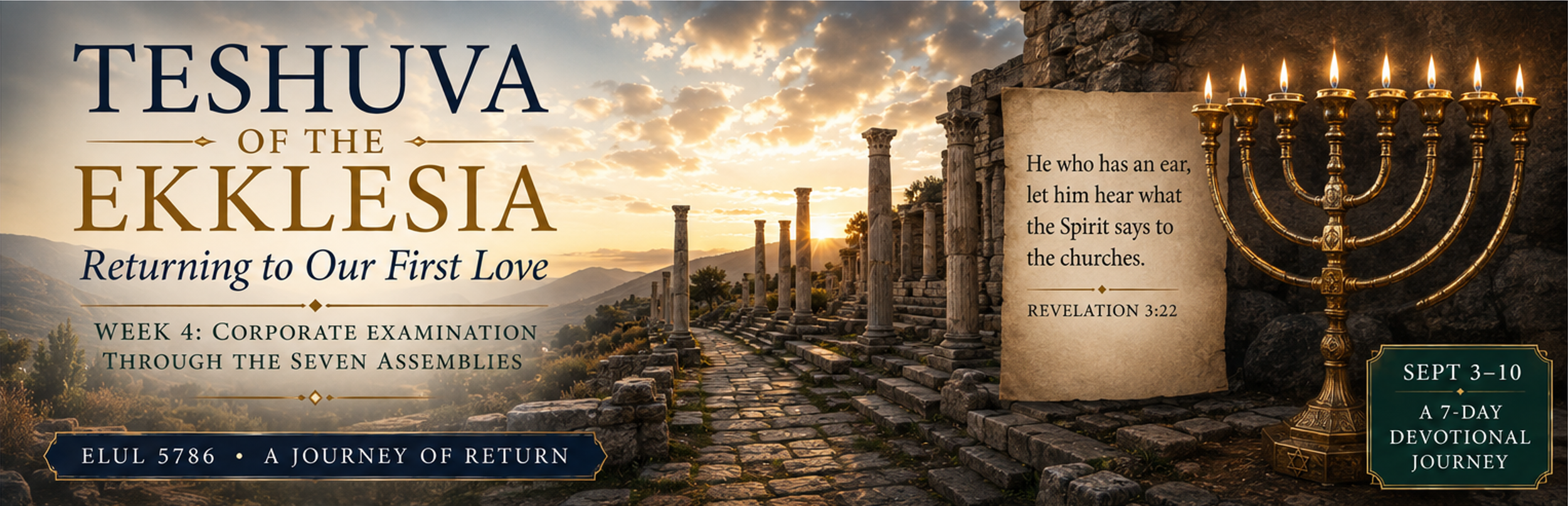
In the book of Revelation, Yeshua speaks directly to seven assemblies. … They remain God’s warning and invitation to His people today
This is not merely the conclusion of a counting of the omer (Lev 23:15-16) ; it is the culmination of covenant. The Torah was given at Sinai on this same day, fifty days after Israel’s deliverance from Egypt. And now, the Spirit is given on the same day, fifty days after our Passover Lamb, Yeshua the Messiah, was raised from the dead.
With the approach of Passover and Easter, I am again reminded of the tensions caused by how the world and the church has lost track of time and the misplaced traditions that have set aside God's plan for celebration and worship. This disconnect between modern calendars and God's ordained accounting of time represents more than a mere technical difference—it signifies a profound spiritual rupture.
The Council of Nicaea in 325 CE represents perhaps…

Around A.D. 160, a bishop in Sardis preached the oldest surviving sermon on the resurrection feast. No eggs. No bunnies. No seasonal sentimentality. Just this:
"I am your freedom. I am the Passover of your salvation. I am the lamb slaughtered for you. I am your ransom. I am your life. I am your light. I am your resurrection. I am your king."